
Personalize your takeaways & insights with AI





Introduction
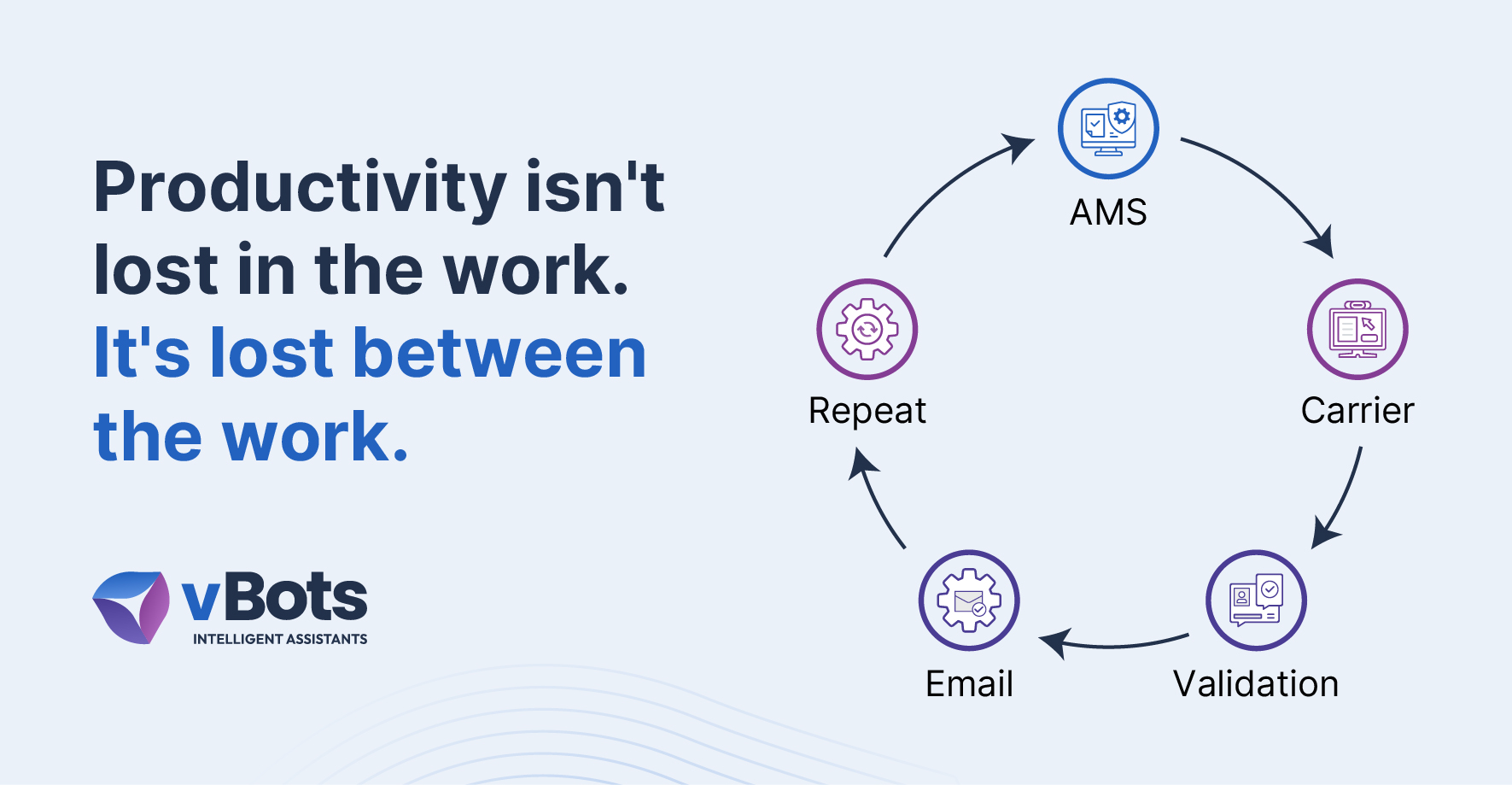
Every insurance agency leader knows the feeling: the books look healthy; renewals are coming in, and yet the team is stretching thin just keeping up with day-to-day activities. Somewhere between the AMS, the carrier portals, and the endless email chains, hours disappear, and nobody can quite point to where they went. That is the productivity gap hiding inside manual insurance operations, and it is costing agencies more time and money than they could expect.
A Gap You Cannot See
Productivity gaps rarely show up as a single line item. They are distributed across dozens of small, repetitive tasks such as re-keying client data from a submission into AMS, manually comparing a bound policy against the original quote, chasing down missing documents before a renewal deadline. Individually, each task takes minutes. Multiplied across a book of hundreds of policies, they roughly add up to weeks of lost capacity every quarter.
Where the Gap Lives
Three areas consistently account for a major proportion of hidden inefficiency in agency operations:
1. Data entry and re-entry
Information gets typed once, then retyped into the AMS, then again into a spreadsheet for reporting and several other times. Every re-keying point is an opportunity for a typo that becomes an insurance error, reducing accuracy and credibility. With AI powered automation, manual rekeying can be eradicated, leaving no room for manual errors.
2. Policy verification
Comparing bound policies against quotes and endorsements is one of the most time-consuming tasks. Verifying policy documents line by line can be normal for a smaller number but while the number of records increases, it tires the staff and creates workload fatigue. This is where policy checking automation earns its advantage, catching mismatches in limits, deductibles, or endorsements before they become coverage gaps, without a staff member manually cross-referencing PDFs line by line.
3. Follow-ups and renewals
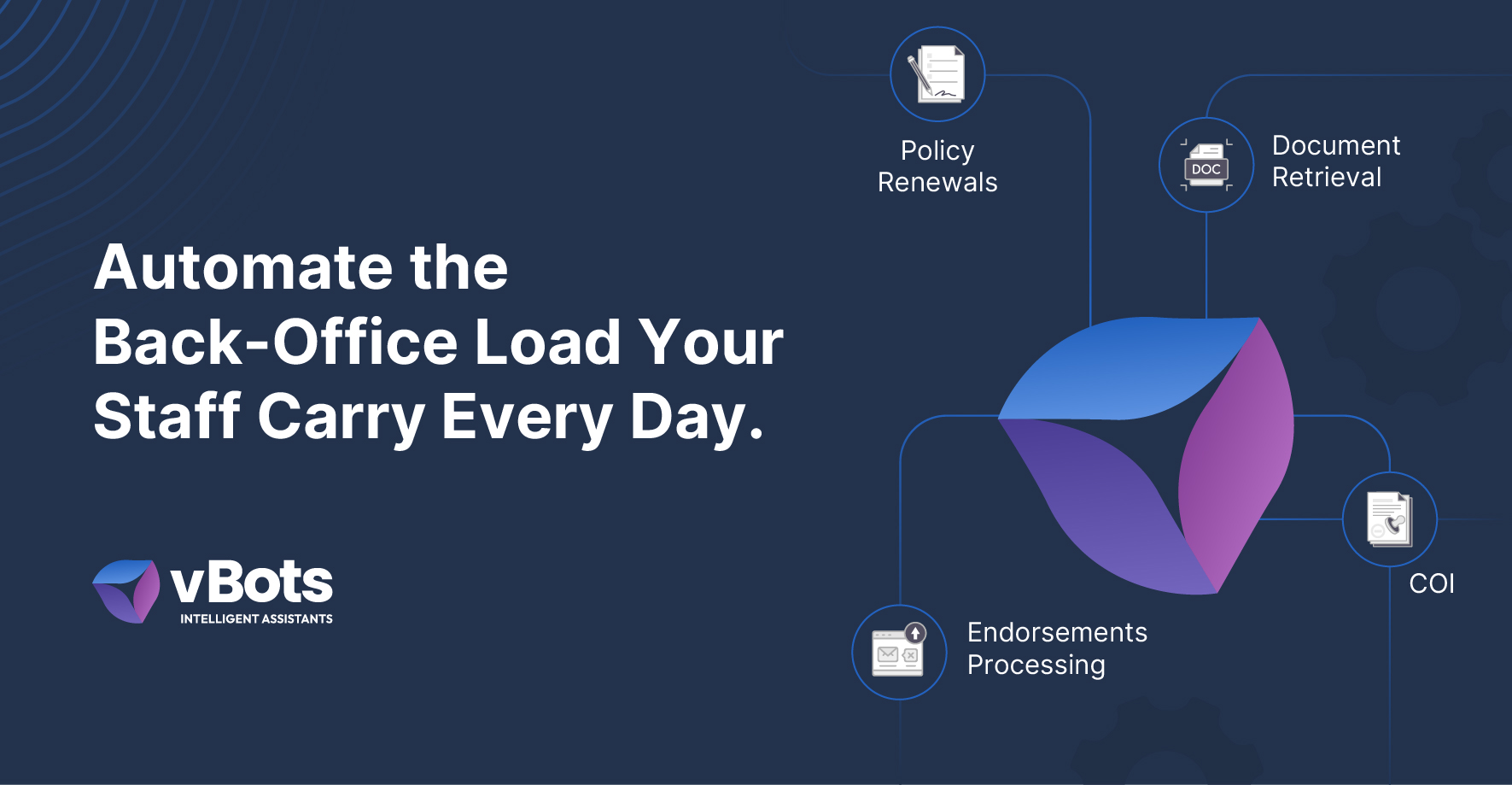
Reminding clients about lapsing coverage, cancellations, reinstatements and follow-ups consume time that could be spent on client relationships and new business. None of these tasks require a staff’s ability. They need consistency and accuracy, which can be attained by insurance workflow automation.
Why "More Hiring" Is Not the Answer
The instinctive response to a growing business is to hire more people to handle the compounding admin and back-office tasks.
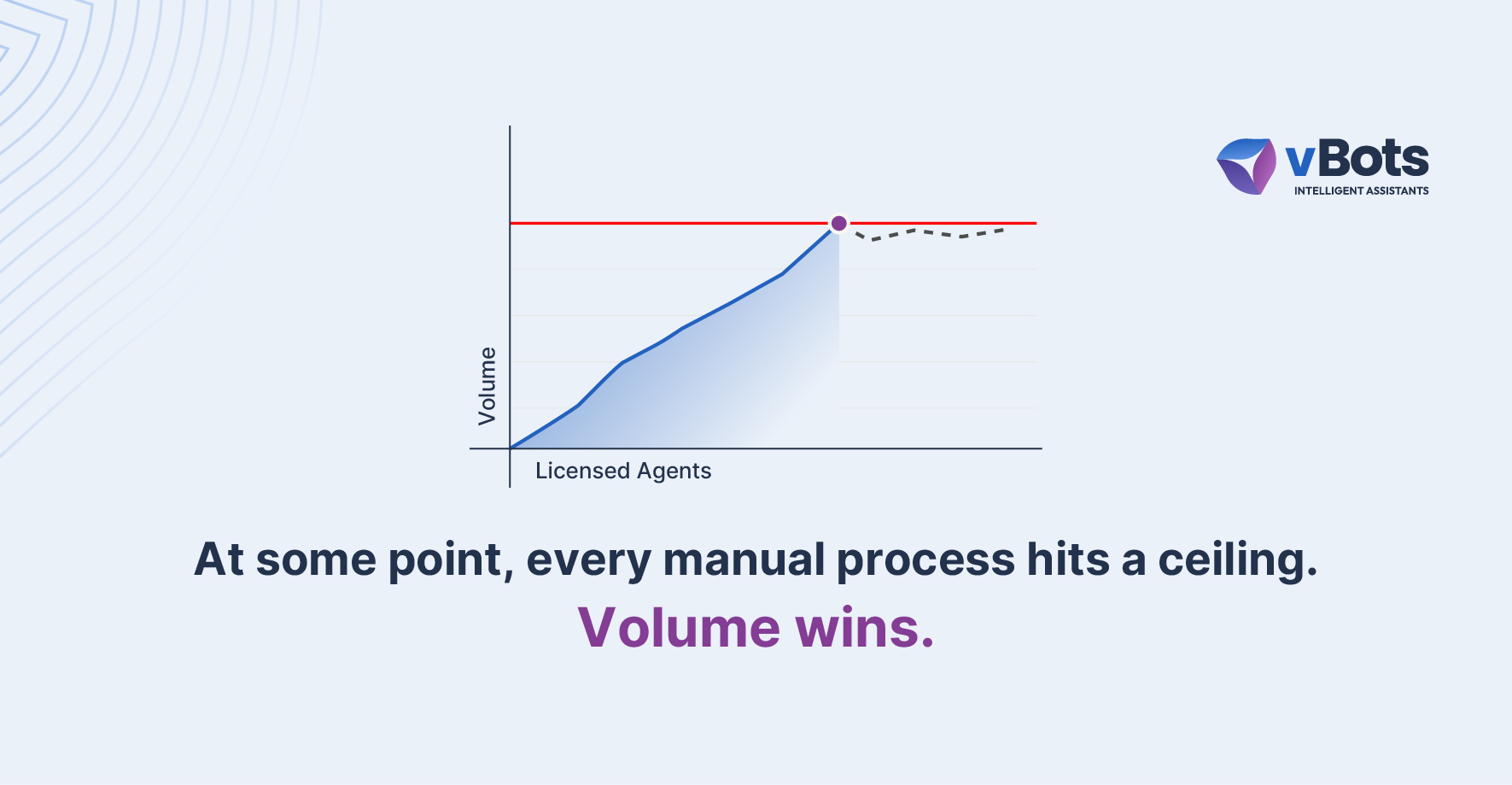
But adding headcount to manual processes just scales the inefficiency alongside the workforce. The leader of a growing business might think he is running short of manpower to coverup the operations, but it’s the other way around. The fix is structural: Insurance workflow automation helps agencies handle more work without adding headcounts.
An AI-Powered Automation system can read submissions, extract relevant data, upload it into the AMS, and flag discrepancies without any human intervention for repeated, time-consuming tasks.
With that, the staff member’s focus shifts from repetitive data entry task to exception handling, reviewing only the cases that need judgment and gives them more time for client relationships and tasks that grow the business like cross-selling, upselling, and personal insurance counselling.
What This Looks Like in Practice
Picture a renewal season where, the insurance workflow automation system opens each file to compare last year’s policy against this year’s proposal, flags any changes in coverage, premium, or terms for human review are kept ready even before the account manager starts their work. In that case, the account manager’s time is spent on the renewals that need attention and flagged reviews, not those that are straightforward.
Agencies that have implemented AI workflow automation report faster turnaround on policy checks, fewer E&O exposures from missed discrepancies, and most importantly for leadership, staff retention improvements, because employees spend their day on meaningful client work instead of repetitive administrative tasks.
Business Case for Leadership
A few questions worth bringing to the leadership table before adopting automation:
- How many hours per week does the team currently spend on manual data entry and policy comparison?
- What is the agency's actual E&O exposure from human error in policy verification?
- How much revenue-generating capacity is trapped in administrative work that could be automated?
These carefully curated questions about daily insurance operations will help you know your organization’s signs to automate.
Adopting automation based on the answers makes the difference between an organization that scales profitably and the one that scales its overhead in lockstep with the business growing.
Closing the Gap
The productivity gap inside manual insurance operations is not a staffing or training problem, but a process breakdown. Agencies are facing the same underlying pressure: growing books of business, tightening margins, and a talent market where licensed staff should not be spending their day on repetitive data work.
Closing that gap starts with an honest look at where manual processes are quietly consuming the most time, and a clear-eyed evaluation of where workflow automation can take over the repeatable work, freeing your team to do what they were hired to do.
This is exactly the gap vBots is built to close. Rather than a generic automation tool, vBots is designed around the specific workflow insurance agencies run every day, so the impact shows up quickly
Talk to our experts to automate insurance operations to find out where the insurance workflow automation could have the highest impact on your agency, and where the biggest wins are hiding in your current operations.
Share this article