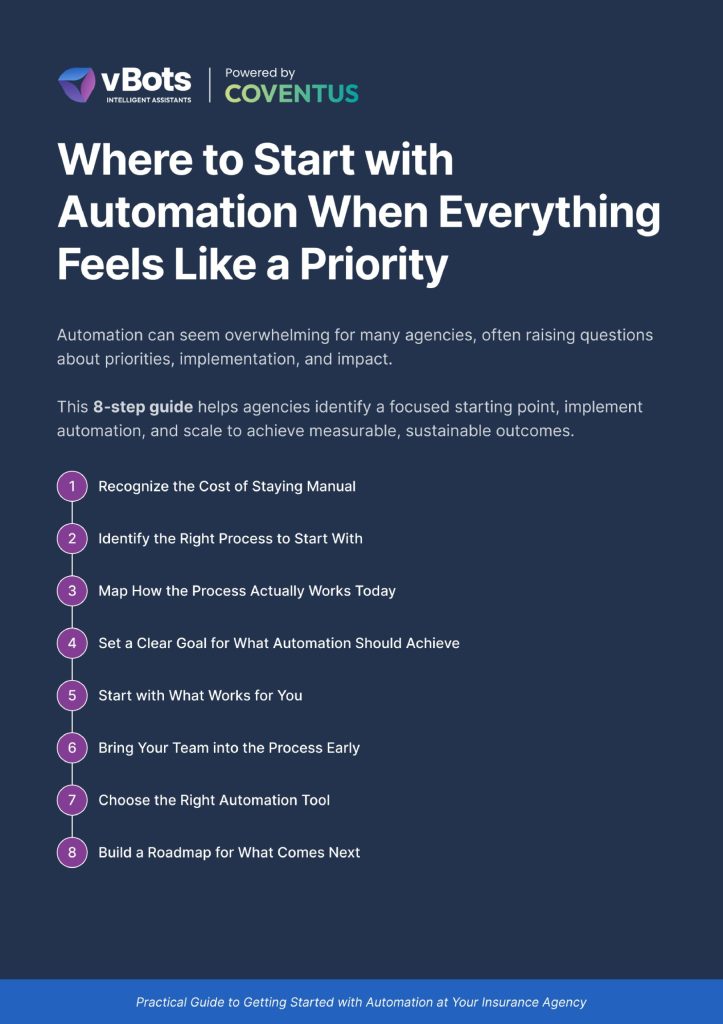
Automation can seem overwhelming for many agencies, often raising questions about priorities, implementation, and impact.

This 8‑step guide helps agencies identify a focused starting point, implement automation, and scale to achieve measurable, sustainable outcomes.

Step 1: Recognize the Cost of Staying Manual

Before deciding what to automate, take an honest look at what manual work is costing your agency today.

1. Are your teams spending significant time each day on tasks that add no strategic value?

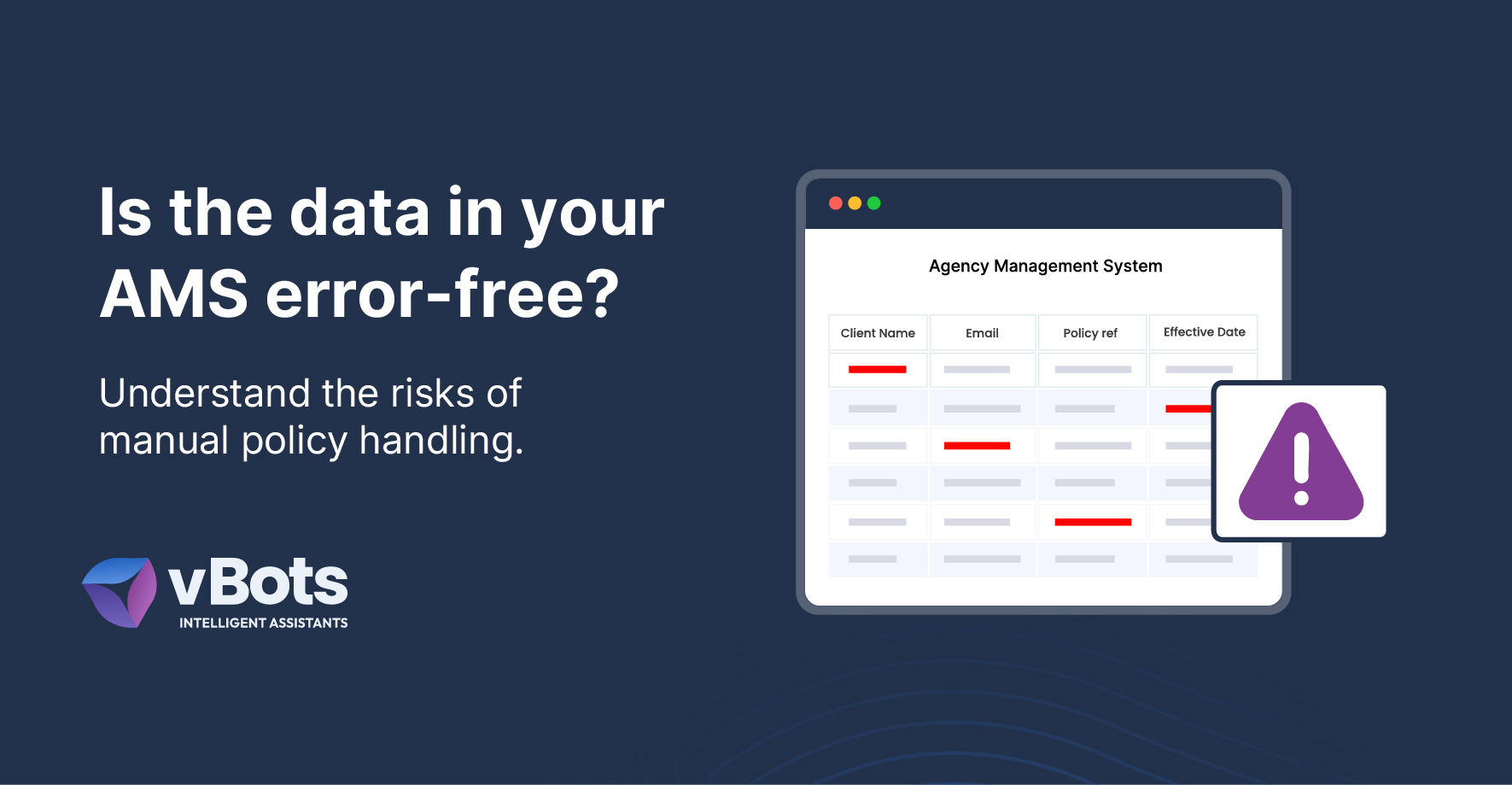
2. Have errors in manual processes led to client dissatisfaction or compliance issues?

3. Are operational bottlenecks preventing you from scaling or responding quickly to new business?

4. Could freeing staff from repetitive work allow them to focus on client-facing or revenue-generating activity?

If most of those apply, the sign for automation is already clear. The next step is knowing where to act first.

Step 2: Identify the Right Process to Start With

Not every process is ready for automation, and trying to automate everything at once is one of the most common reasons agencies stall before they start.

Use this filter to find your starting point:

Among all the tasks your team performs, which one takes too long?

Then run it through three criteria:

Step 3: Map How the Process Actually Works Today

Before building anything, document the current workflow from start to finish. This does not need to be complex. Walk through the steps your team follows, note where handoffs happen, where delays occur, and where errors tend to show up.

This step matters for two reasons:

Step 4: Set a Clear Goal for What Automation Should Achieve

Automation should serve a specific business outcome.

Before moving forward, define what success looks like.

Examples:

Having a defined goal keeps the project focused and gives leadership a concrete result to evaluate.

Step 5: Start with what works for you

The right approach is to start small, show results, and build from there. Three workflows that consistently deliver strong early results for insurance agencies are:

Policy Renewals: Automatically retrieving renewal data and updating internal systems, reducing the manual back-and-forth across carrier portals.

Direct Bill Reconciliation: Matching carrier payments against agency records to eliminate hours of manual review each week.

Notice of Cancellations: Monitoring carrier portals, triggering alerts, and updating records without manual intervention.

Step 6: Bring Your Team into the Process Early

Automation initiatives fail when teams are not prepared for them. Staff often worry about job displacement. The reality is that automation removes low-value manual work, so people can spend more time on client service, retention, and work that requires human judgment.

Involve your team before deployment. Provide training so people feel confident working alongside automated systems. When staff see automation as support, adoption is faster and smoother.

Learn more about it in our article about Change Management.

Step 7: Choose the Right Automation Tool

Insurance workflows require precision, security, and domain knowledge that generic automation tools often lack. When evaluating a technology automation tool, look for:

Step 8: Build a Roadmap for What Comes Next

Once the first workflow is running, the conversation in your agency will shift from “where do we start” to “what do we automate next.” At that point, a structured roadmap keeps expansion on track.

A scalable roadmap includes:

Pilot insights: Reviewing early-stage outcomes and challenges.

Next-phase priorities: Identifying adjacent workflows to automate.

Governance: Defining ownership, access controls, and decision traceability.

Continuous improvement: Refining workflows and performance over time.

Automation starts with one clear step. Progress comes from improving processes and proving results. When teams experience reduced manual workload, fewer errors, and more time for meaningful work, automation shifts from being an operational change to a business advantage.

Ready to take the first step towards automation? Talk to our experts to find your ideal starting point